 Yogurt Atelier
Cool Sauce Cousins
Cucumber, garlic and yogurt turn up in kitchens across the map. They look alike, but they are not the same dish.
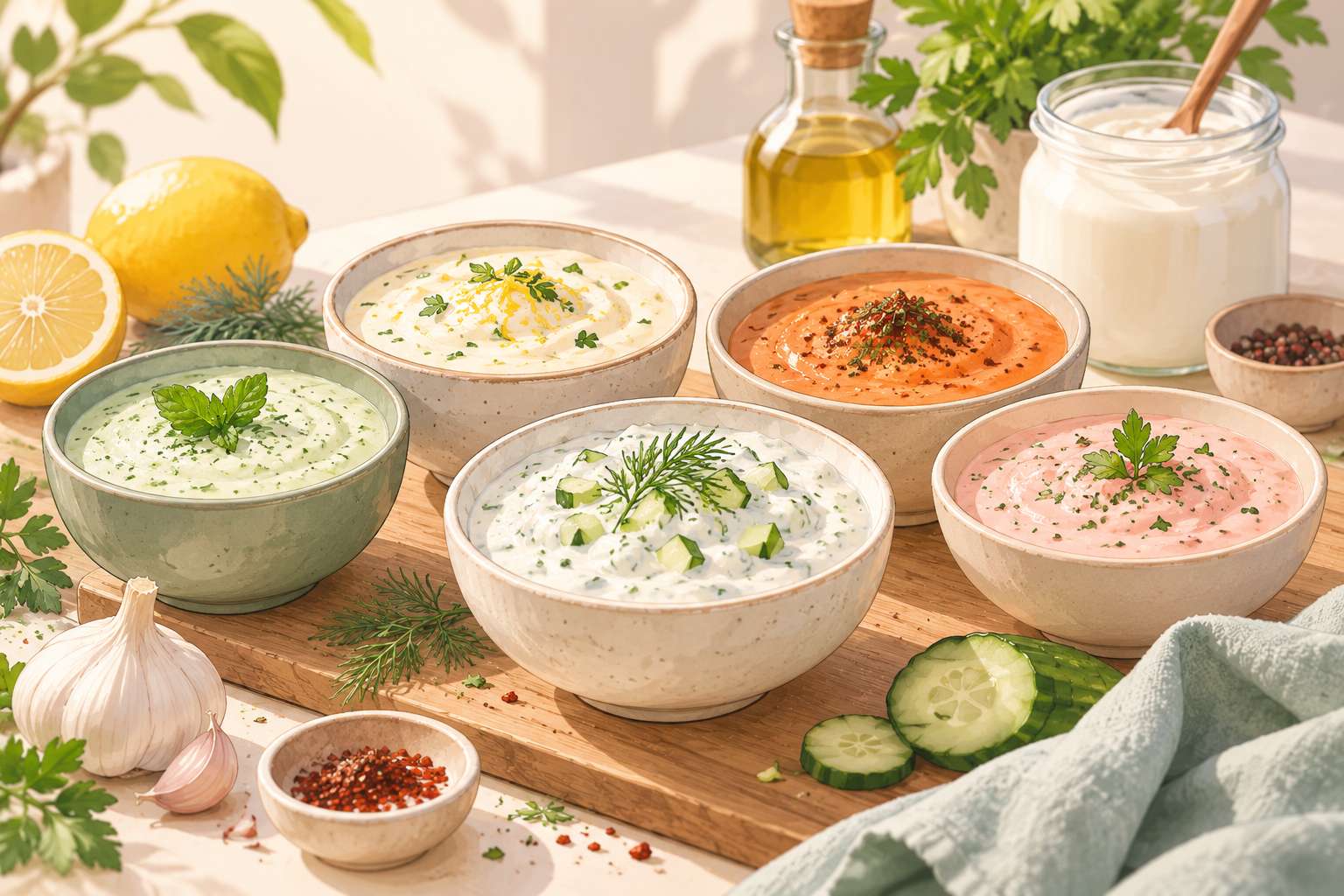
Set a plate of grilled meat or spiced rice in front of almost any cook between the Balkans and South Asia and you are likely to see a cool yogurt sauce nearby. They share a family resemblance: plain yogurt, something crisp, something fragrant, a pinch of salt. But each member of the family has its own habits, and treating them as one dish misses what makes them good. Here is a guide to telling the cousins apart.
Tzatziki
Tzatziki is the sauce most often associated with Greece. It is made from thick, strained yogurt, grated or chopped cucumber, garlic and olive oil, and often a little dill or mint and a splash of vinegar or lemon. Cooks commonly squeeze the water from the cucumber so the sauce stays thick. It is served with grilled meats, fried vegetables and bread. The thick yogurt and the olive oil give it a rich, spoonable body.
Cacik and haydari
Turkish cacik sits closer to a cold soup. It is looser than tzatziki, made by stirring cucumber, garlic, salt and herbs such as mint or dill into yogurt thinned with water. It is often eaten with a spoon, on its own or alongside grilled food, and in warm weather it can be served in a bowl very cold. Haydari, also Turkish, goes the other way: strained yogurt thickened further and mixed with herbs and garlic into a dip for bread.
Mast-o-khiar and its neighbors
In Iran, mast-o-khiar combines yogurt with cucumber and herbs. Many versions also include raisins, walnuts or dried mint, which add sweetness, crunch and a dry fragrance that tzatziki does not have. It is eaten as a side dish with rice, stews and kebabs. Across the Caucasus and Central Asia, similar mixtures of yogurt and fresh herbs appear on the table, each with its own preferred greens.
Raita
Indian raita is the most flexible cousin. The base is yogurt, usually whisked until smooth, and it carries cucumber, onion, tomato, mint, grated vegetables or even fruit. Spices such as roasted cumin, black salt or chili are common. Where tzatziki is garlicky and rich, raita is typically lighter and aims to cool the heat of curries and rice dishes. The same idea of yogurt as the calming counterweight to spice runs through both.
How to tell them apart
Put the sauces side by side and the differences come down to a few choices. The first is thickness: strained yogurt gives a dip, plain unstrained yogurt gives a looser sauce, and added water gives a soup. The second is the fragrance: garlic and olive oil point toward the Mediterranean, mint and dried herbs toward Turkey and Iran, and toasted spices toward South Asia. The third is texture: raw cucumber gives crispness, while nuts, raisins or onions add variety. Finally, salt matters in every version, because it draws out flavor and brings the vegetables into balance with the yogurt.
Making your own
You do not need a long list of ingredients to explore the family. Start with a bowl of plain yogurt, a cucumber and a little salt, and then take one route: add garlic and olive oil, add mint and a splash of water, or add roasted cumin and chopped onion. Taste as you go and adjust to your own liking. The recipes in the Recipes tab give full versions of several of these sauces when you want them written out.
Same base, different accents: the sauce tells you where the cook learned it.
Bring your curiosity
into the kitchen.
Explore guided preparation, fermentation tracking and yogurt recipes in Yogurt Atelier for iPhone.
 Coming soon to the App Store.