 Yogurt Atelier
Why Whey Separates
The watery layer on top of yogurt is normal. Here is why it forms and what you can do about it.
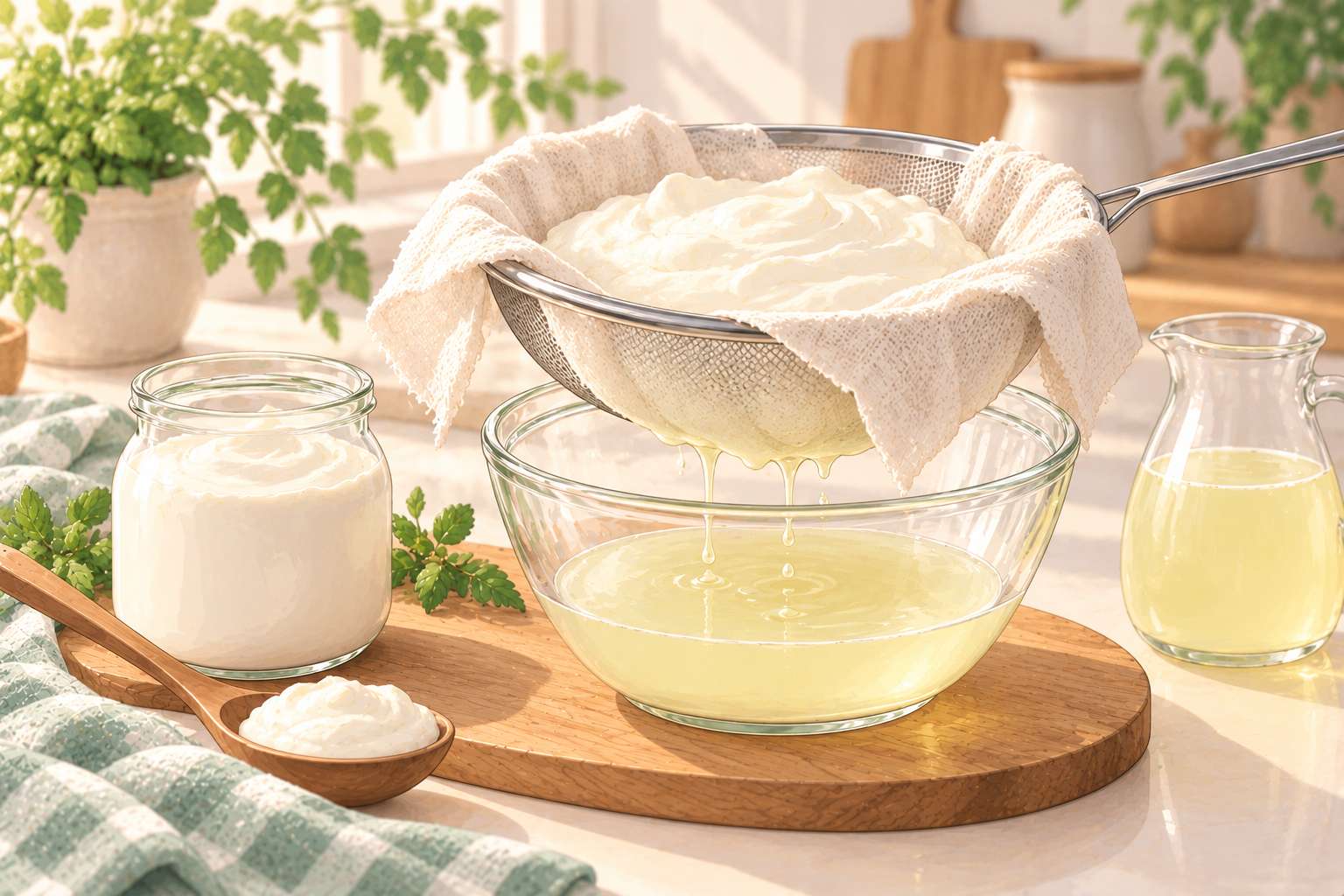
Open a tub of yogurt and you may find a thin layer of liquid on top. Many people assume something has gone wrong, but this watery layer is common and is a normal feature of yogurt texture. It is whey, the liquid that was held inside the yogurt gel and has been squeezed out. The process is called syneresis, and understanding it helps you decide whether to stir, drain or ignore it.
What is happening
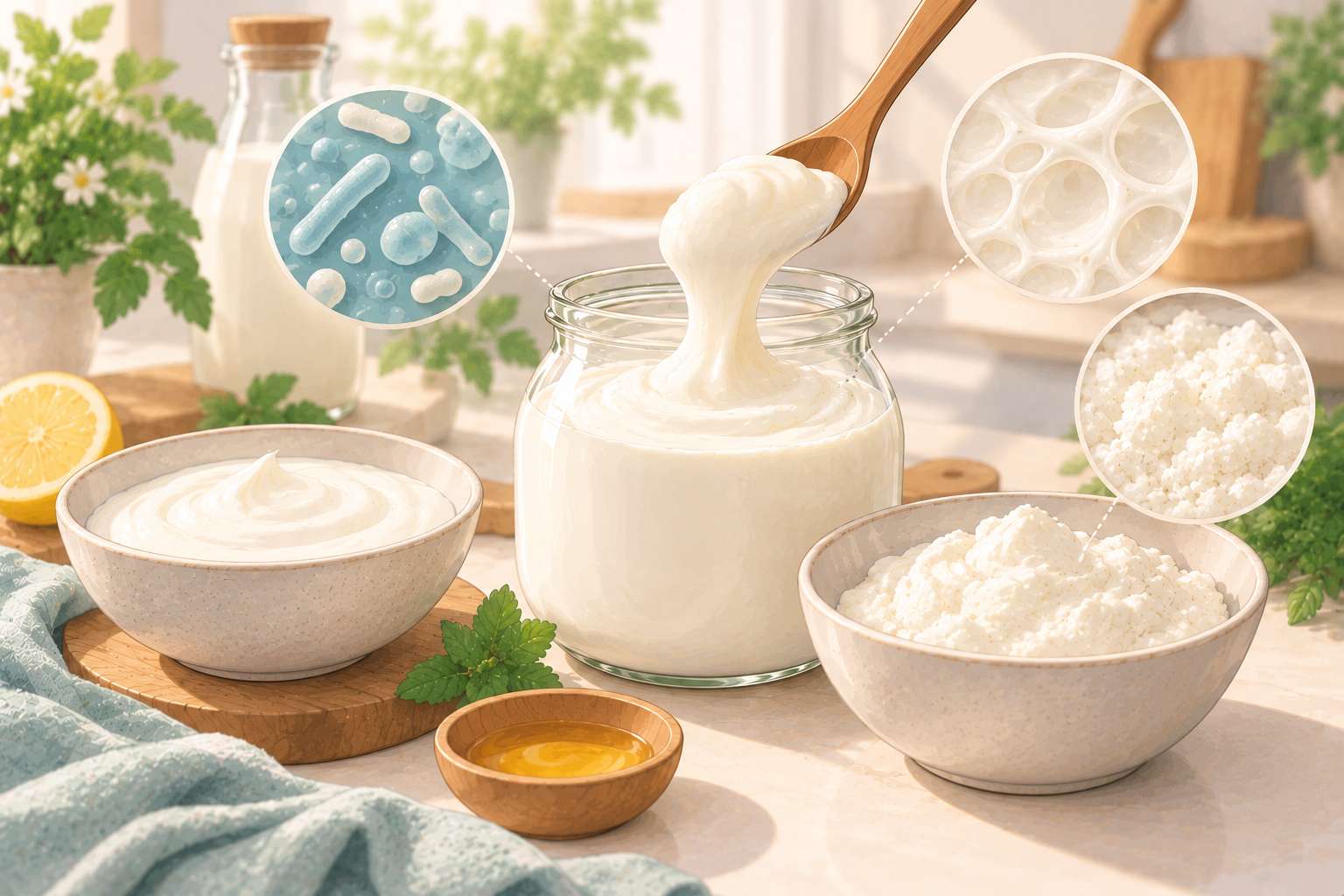
Yogurt's gel is a network of milk protein holding water in its pockets, and the network is not perfectly stable. Over time, the strands can tighten and contract, pushing a little liquid out. Dairy researchers describe syneresis as the expulsion of whey from the gel network, and they treat it as a texture defect in commercial yogurt because shoppers tend to dislike it. The liquid is mostly water with some dissolved milk sugar, minerals and a little protein.
What makes it more likely
Several things make separation more likely. A gel that is weakly built, for instance from milk with lower protein or milk that was not heated enough, holds water less firmly. Disturbing the gel while it sets, or breaking and stirring it, can damage the network. Very high acid can cause the network to shrink. The kind of starter matters too, because some cultures produce compounds that help hold water. Reviews of the research list formulation, processing and culture choice among the main factors.
Handling and storage
Handling after setting matters as well. Moving or shaking a jar, scooping from it repeatedly and storing it at fluctuating temperatures can all encourage liquid to collect. Setting yogurt in the container you will serve it from and cooling it gently is a common way to avoid unnecessary disturbance. Strained yogurt has already lost most of its loose whey, so it typically shows less visible separation.
What to do with it
You can stir the whey back in, and the yogurt will be a little thinner. You can pour it off, which leaves a thicker yogurt. You can also use it in baking, smoothies, soups or bread dough in place of some of the water, as cooks have done for generations. Which you choose depends on the texture you want. On its own, a layer of whey is a normal texture feature of yogurt.
When it is something else
Separation is not the only change a yogurt can show. If you notice a bad smell, an unusual color, pink or green spots, or mold, discard the yogurt. Do not taste it to decide. A watery layer on an otherwise normal yogurt is different from signs of spoilage, but when you are uncertain, err on the side of throwing it out.
Reducing it at home
To get less separation at home, use milk with enough body, heat it as your recipe directs, keep the jar still while it sets, and handle the finished yogurt gently. If some whey appears anyway, you have a free ingredient and a lesson about the protein network, not a failed batch.
Whey on top is physics, not failure: the gel gave up a little water.
Bring your curiosity
into the kitchen.
Explore guided preparation, fermentation tracking and yogurt recipes in Yogurt Atelier for iPhone.
 Coming soon to the App Store.