 Yogurt Atelier
The Fermented Milk Family
Yogurt, kefir, buttermilk, skyr and more: relatives with different cultures and different rules.
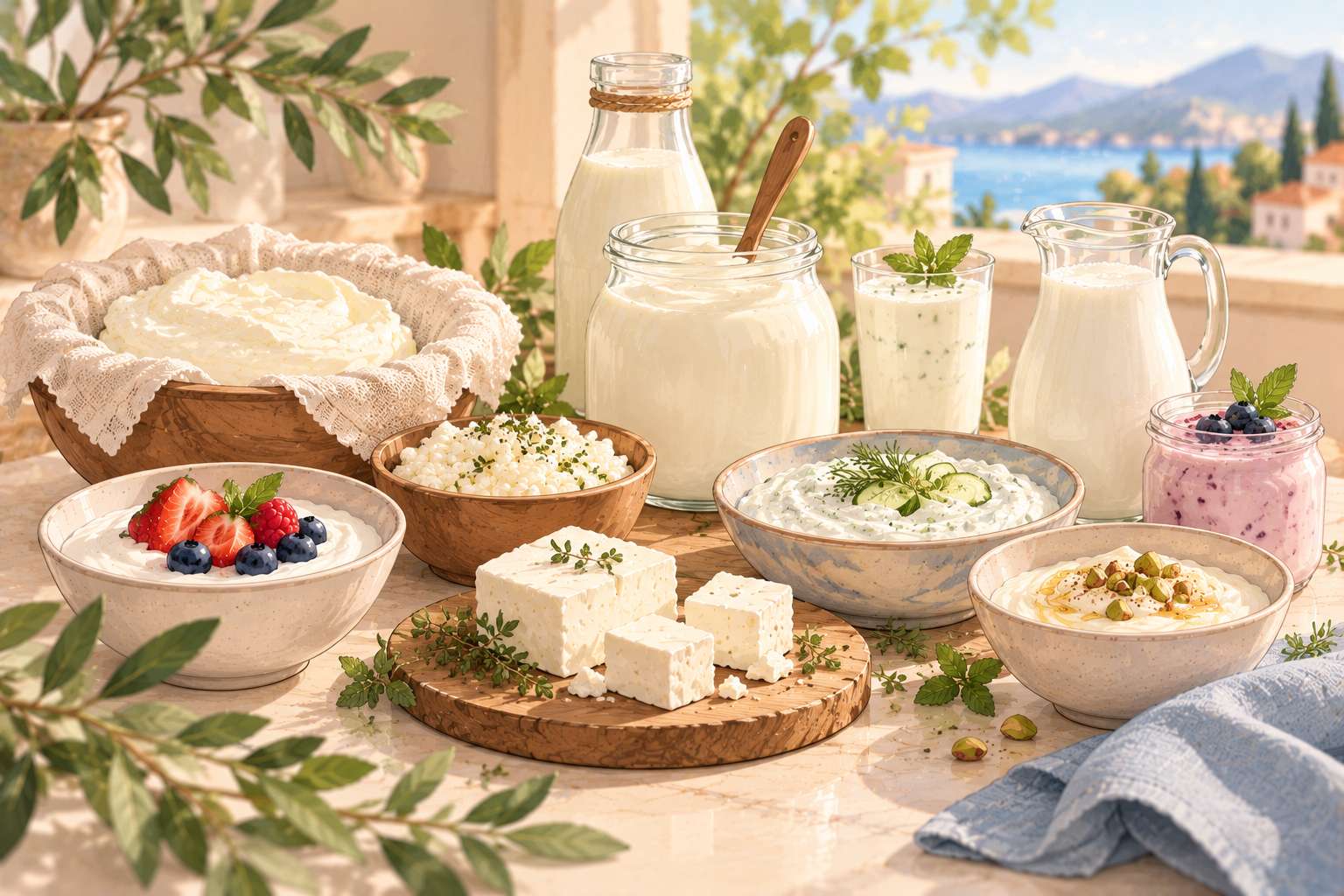
Yogurt is one member of a large family of fermented milks, and the family is easy to muddle. Many of these foods look similar in a glass or a bowl, and they are often swapped in conversation. They are not interchangeable, though. They differ in the cultures that make them, the way they are produced and how they are named. This guide sorts out the main relatives without claiming that every fermented milk is yogurt.
What counts as fermented milk
In its simplest sense, a fermented milk is milk that has been acidified by microorganisms, so that it becomes thicker, tangier and different in character from fresh milk. International food standards for fermented milks describe the group as a whole and then define its members by the cultures that produce them. Yogurt, kefir and kumys each appear in the Codex standard as separate products with their own culture descriptions. Being fermented milk does not make something yogurt.
Yogurt
Yogurt in the Codex standard is made with Streptococcus thermophilus and Lactobacillus delbrueckii subsp. bulgaricus, working together. An alternative form of yogurt uses S. thermophilus with other Lactobacillus species. National rules differ in the details, but the central idea is the same: a defined pair or group of cultures, a warm fermentation and a thick, tangy result.
Kefir and kumys
Kefir is made with a more varied community of microorganisms, including yeasts as well as lactic acid bacteria. This is why kefir can be mildly effervescent and thinner than yogurt, and why it is described as a different product rather than a kind of yogurt. Kumys, traditionally made from mare's milk in parts of Central Asia, also involves yeasts and can be slightly alcoholic. Both are legitimate fermented milks in their own right.
Buttermilk
The word buttermilk covers more than one thing. Traditional buttermilk is the liquid left after churning butter. Cultured buttermilk, common in North American shops, is made by fermenting milk with specific cultures and has a thick, sour taste. In South Asia, buttermilk usually means a thin, seasoned drink made from yogurt. When a recipe asks for buttermilk, check which kind it means.
Strained and cultured relatives
Skyr, from Iceland, is a thick, strained dairy food that is usually described as a type of fermented milk product made with its own cultures, though classification varies. Labneh, chakka and Turkish süzme yoğurt are strained yogurts. Sour cream and crème fraîche are cultured creams. Quark is a fresh, soft dairy product made by fermenting milk and often draining it. Each is a relative, and none of them is a simple synonym for yogurt.
Reading names carefully
When you read a label, look for the specific name, such as yogurt, kefir or cultured buttermilk, and for statements about live or active cultures where they appear. The name tells you what rules the product should follow. If you cook, remember that substitutions change texture and acidity, so a swap may need small adjustments to the recipe.
Fermented milk is the family; yogurt is one of its members.
Bring your curiosity
into the kitchen.
Explore guided preparation, fermentation tracking and yogurt recipes in Yogurt Atelier for iPhone.
 Coming soon to the App Store.