 Yogurt Atelier
Milk Matters
Cow, sheep, goat, buffalo or plant-based: the milk you start with shapes the yogurt you get.
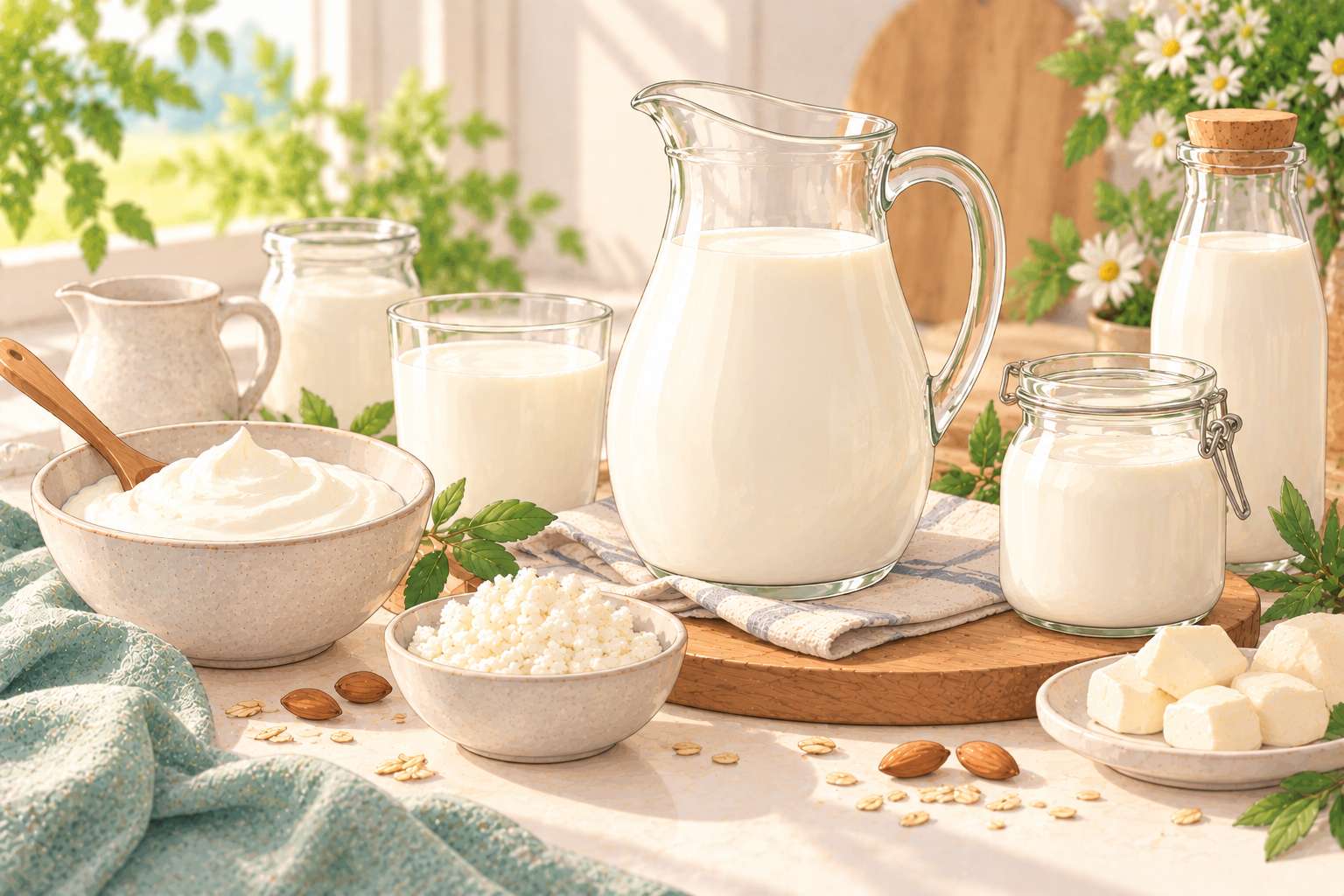
Two people can follow the same method and end up with quite different yogurts, and the milk is often the reason. Milk is a complex mixture of water, fat, sugar, proteins and minerals, and each animal's milk has its own balance. How that milk is processed before it reaches your pot matters too. Understanding a few basics helps you choose a milk for the texture and taste you want.
One idea, many animals
Cow's milk is the most common base for yogurt in many countries and gives a mild, balanced result. Sheep's milk is richer in fat and protein than cow's milk, and yogurts made from it are often thick and creamy. Goat's milk gives a lighter, slightly tangy yogurt that can set more softly. Buffalo milk is also rich and is used for dense, creamy yogurts in parts of South Asia and the Mediterranean. These are general tendencies, and individual milks vary with breed, feed and season.
Fat, protein and body
Fat contributes richness and a smooth feel in the mouth. Whole milk makes a creamier yogurt, and lower-fat milk makes a lighter one. Protein, especially casein, builds the gel that holds yogurt together, so milk with more protein tends to give a firmer set. This is why some cooks add a spoonful of milk powder to thicken a batch, and why strained yogurt is so dense: removing whey concentrates the protein.
Pasteurized and shelf-stable milk
Most shop milk has been pasteurized, which means it was heated to reduce unwanted microbes. Milk labeled ultra-high temperature has been heated more intensely and sold in sealed packs. Cooks often have good results with pasteurized milk, but processing details vary by country, and some products behave differently, so follow the guidance of your starter and recipe. Heating milk gently at home before adding the starter also changes the proteins in a way that helps the yogurt set more firmly, as we explain in the science articles.
Homogenized or not
Homogenized milk has had its fat broken into tiny droplets so it does not rise as cream. It generally produces a smooth, even yogurt. Non-homogenized milk may form a layer of cream on top of the finished yogurt, which some people enjoy and others stir back in. Neither is wrong, and the choice is about the look and texture you prefer.
Plant-based alternatives
Plant-based milks are different foods. Soy milk contains meaningful protein, while many other plant milks contain much less, and published reviews put coconut milk well below soy. Because they lack milk's casein, they do not form a gel the same way, so makers usually add thickeners or special cultures. Treat plant-based yogurts as a separate category with their own instructions rather than assuming they behave like dairy.
Choosing a milk to start with
If you are new to yogurt making, begin with fresh pasteurized whole cow's milk and a plain starter, and change one thing at a time. Try a different milk, note the taste and texture, and write down what you did. That way you will learn which milk gives you the yogurt you like best.
Change one variable at a time and the milk will teach you what it does.
Bring your curiosity
into the kitchen.
Explore guided preparation, fermentation tracking and yogurt recipes in Yogurt Atelier for iPhone.
 Coming soon to the App Store.