 Yogurt Atelier
Set, Strained & Drinkable: Types of Yogurt
A friendly guide to the yogurts you will meet at home and in shops.
Walk down a yogurt aisle and the labels multiply. Most of the differences come down to a few questions: how thick is it, what milk was used, how much fat does it contain, and was anything added? Once you recognize those questions, a shelf of unfamiliar tubs becomes much easier to read. This guide walks through the main types and what each is good for.
Set and stirred
Set yogurt is cultured in its own container and left undisturbed, so it develops a soft, jelly-like body that you can cut with a spoon. Stirred yogurt is mixed after culturing, which breaks that structure into a smoother, creamier texture. Much of the yogurt you buy in tubs is stirred. At home, you can make either: leave the jar still for a set result, or give it a gentle stir after it has chilled.
Strained yogurt
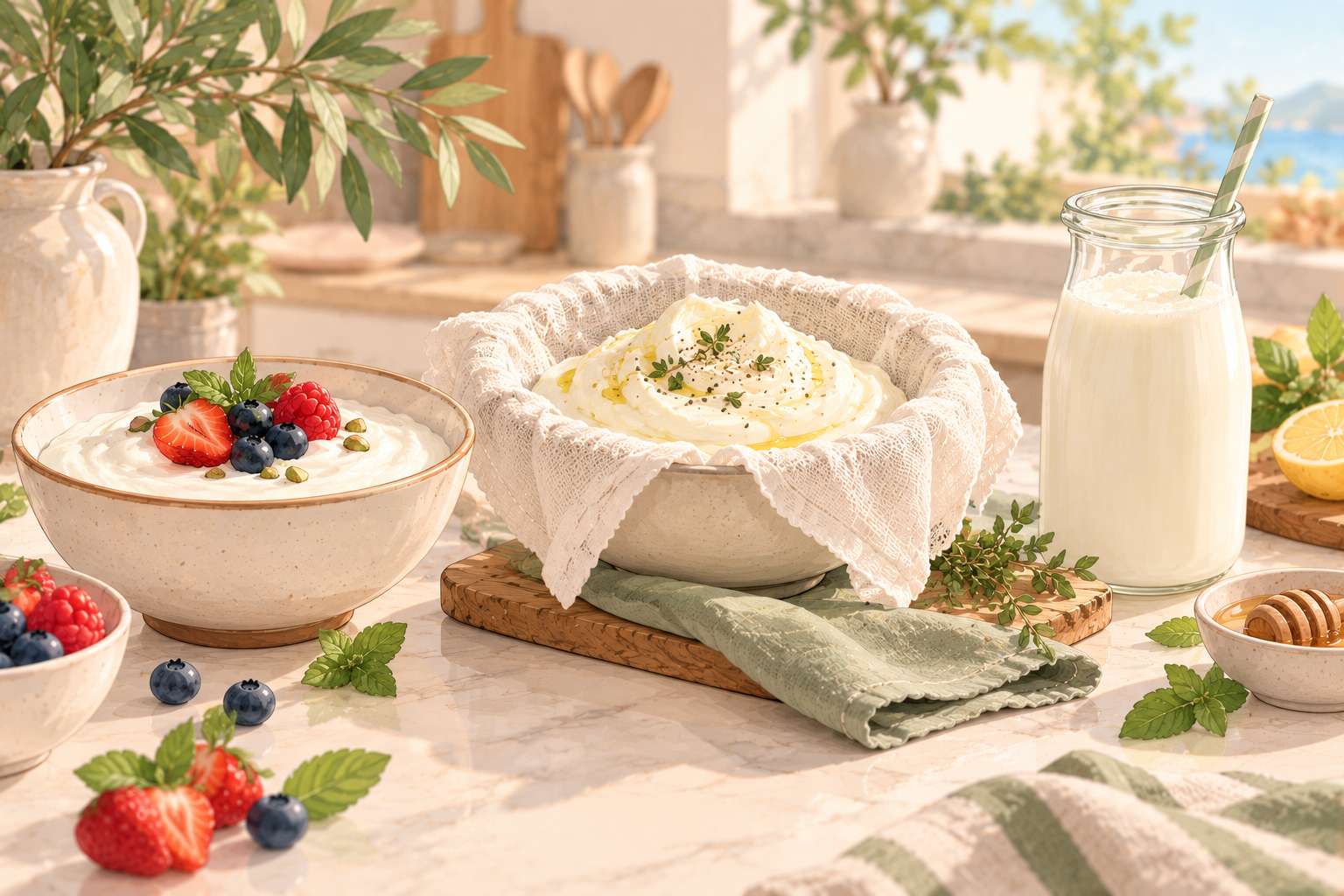
Straining removes some of the watery whey. The more you strain, the thicker and tangier the yogurt becomes, from soft and creamy all the way to spreadable labneh. International food standards group such products as concentrated fermented milks, with a noticeably higher protein level than ordinary yogurt. Strained yogurt holds its shape well, which is why it suits dips, spreads and breakfast bowls.
Strained yogurt is simply yogurt with some of its whey drained away.
Other milks
The other big dial is the milk. Cow's milk is the most common, but goat, sheep and buffalo milk make yogurts with their own character. Plant-based yogurts use soy, coconut, oats or nuts, and because those milks behave differently from dairy, they usually rely on a starter made for them and often a thickener to set. Texture, flavor and protein can differ a lot between plant bases, so it is worth checking the label.
Fat is another dial
Yogurts are sold whole, low-fat and non-fat, and the names vary by country. Fat gives richness and a rounder flavor, while lower-fat versions taste lighter. Neither is better in general; it depends on what you are making and what you like.
Drinkable yogurt
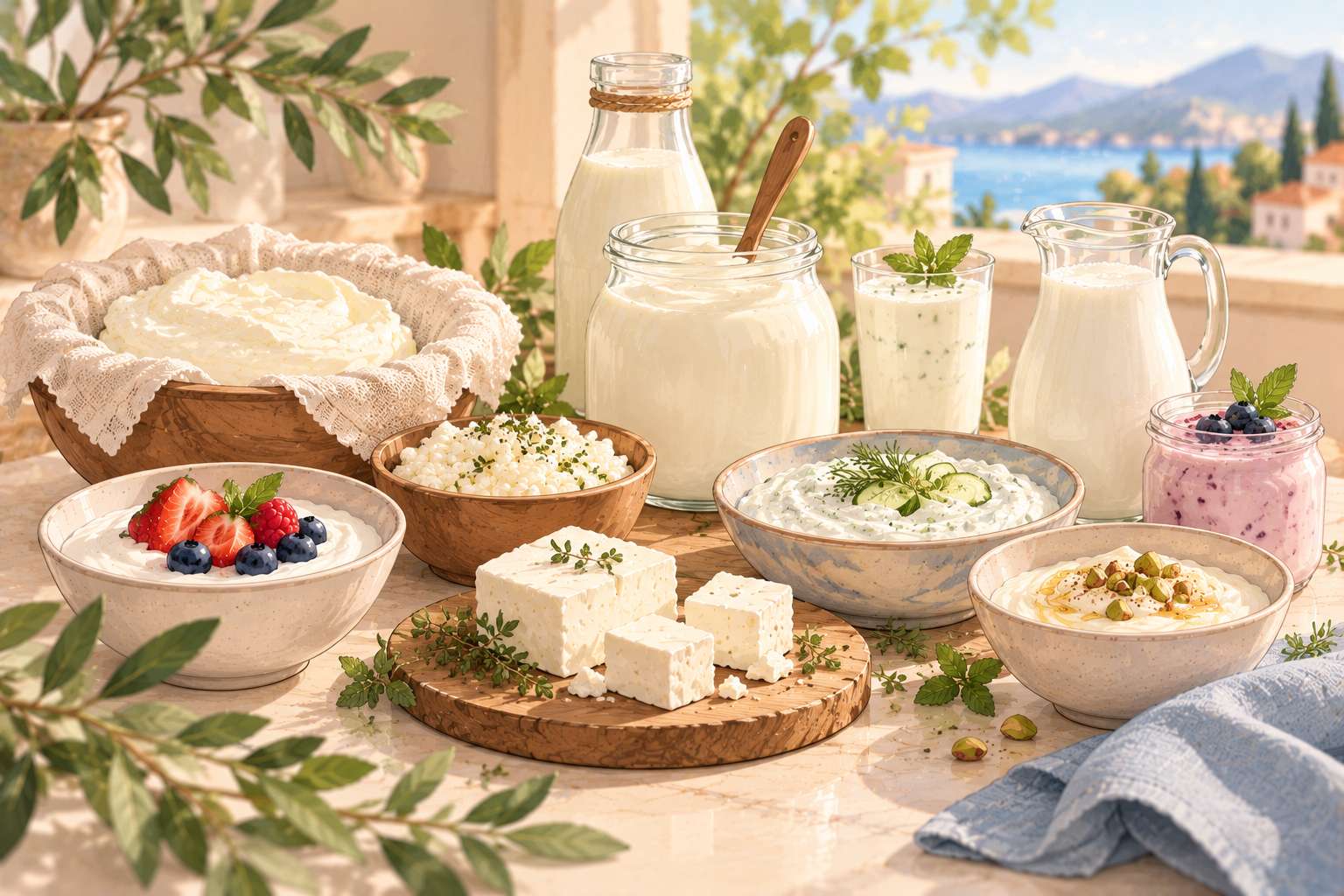
Thinner yogurts made for sipping include Indian lassi, which can be sweet or salty, and Turkish ayran, which is yogurt whisked with water and salt. They are refreshing with food and easy to make from ordinary plain yogurt.
Plain, flavored and everything between
Plain yogurt can be as simple as milk and cultures. Flavored yogurts add sugar, fruit preparations or thickeners. Fruit-on-the-bottom, whipped and flavored styles are all variations on the same base. Reading the ingredient list tells you what you are getting, and the article on reading labels goes into more detail.
Matching the type to the task
Choose by the job. For dips, spreads and thick breakfast bowls, reach for strained yogurt. For sauces and everyday cooking, plain stirred yogurt is flexible. For drinks, a thin, tangy yogurt blends easily. If you are curious about goat milk or plant-based yogurt, the guides in the Make tab explain how to make them.
Bring your curiosity
into the kitchen.
Explore guided preparation, fermentation tracking and yogurt recipes in Yogurt Atelier for iPhone.
 Coming soon to the App Store.